Why We Can't Look Away: Our Strange Fascination With Serial Killers

There's a particular guilt that comes with true crime fandom. You queue up another documentary about a man who killed a dozen people, and somewhere in the back of your mind a voice asks why this feels like entertainment. And yet the genre keeps growing — podcasts about decades-old murders top the charts, and courtroom footage from cases like Alex Murdaugh's draws audiences the size of championship sporting events.
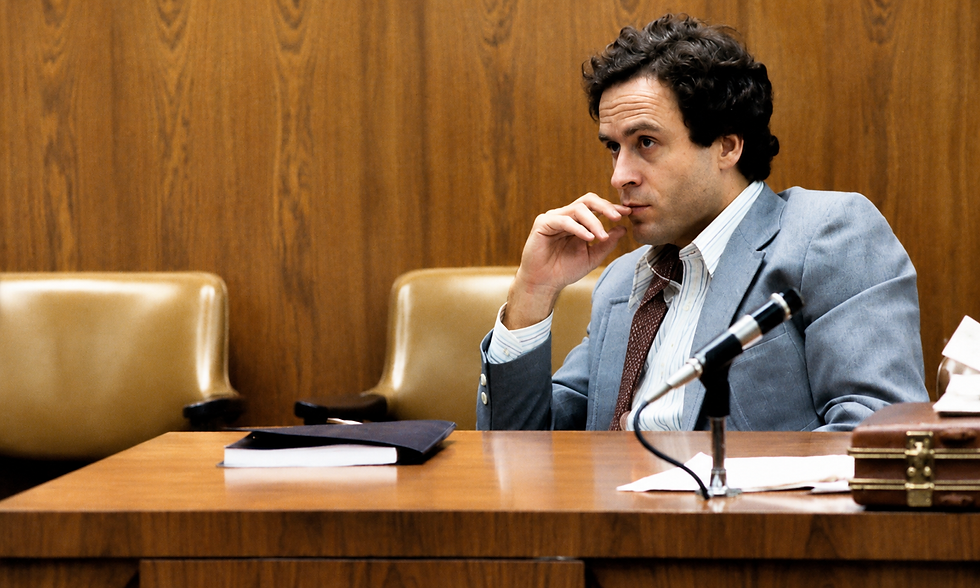
Author and true crime historian Harold Schechter argues this isn't new at all. He traces public appetite for gruesome murder stories back centuries, and believes law-abiding, moral people need a way to ventilate dark, forbidden impulses and fantasies they'd never actually act on. In his view, true crime functions as a kind of social safety valve, letting audiences release that pressure vicariously rather than through anything real.
Part of the appeal is also the puzzle itself. Criminologist Dr. Scott Bonn, who tours the country speaking about serial killers, describes the genre as offering audiences a catharsis for fear — a way of processing dread by naming it and studying it from a distance. He's also fond of pointing out how selective our fascination really is: "Ted Bundy had 36 victims. Who can name one?" he asks his audiences, noting that our attention gravitates almost entirely toward the killer, not the people he killed.
There's a psychological-distance element too. Dr. Gail Saltz, a psychiatrist at NY Presbyterian Hospital, has described the appeal as a kind of controlled proximity to danger — the pleasure of observing something real and violent while remaining safe in your own living room. Psychologist Dr. Pamela Rutledge frames it in almost identical terms, noting that true crime lets us experience fear in a safe way, tied to something deeper and evolutionary in how humans learn to recognize threats.
That instinct to understand the "why" behind the crime shows up constantly among fans and clinicians alike. Cleveland Clinic psychologist Dr. Chivonna Childs puts it simply: it's human nature to be inquisitive, and true crime gives us a rare, safe glimpse into the mind of someone who's done something unthinkable. Forensic psychologist Dr. Tarra Bates-Duford takes that a step further, suggesting the public wants to identify what created the "monster" so they might somehow prevent it from happening again — an impulse that turns childhood backstories into clues we collect, as if understanding the origin might inoculate us against ever encountering something like it ourselves.
And then there's the shift happening inside the genre itself. The best modern true crime — the kind serious podcasters aim for — has moved away from mythologizing killers and toward centering the people who were killed: their names, their families, the lives interrupted. That shift matters. It's the difference between fascination that dehumanizes and fascination that insists on remembering.
None of this fully resolves the discomfort, and maybe it isn't meant to. Horror, mystery, and grief have always drawn an audience. We've just found new ways — a feed, a podcast, a courtroom livestream — to keep telling the same old story about the darkest corners of human nature, and our need to look directly at it.


Comments