The Death of Privacy: Is True Anonymity Already Gone?

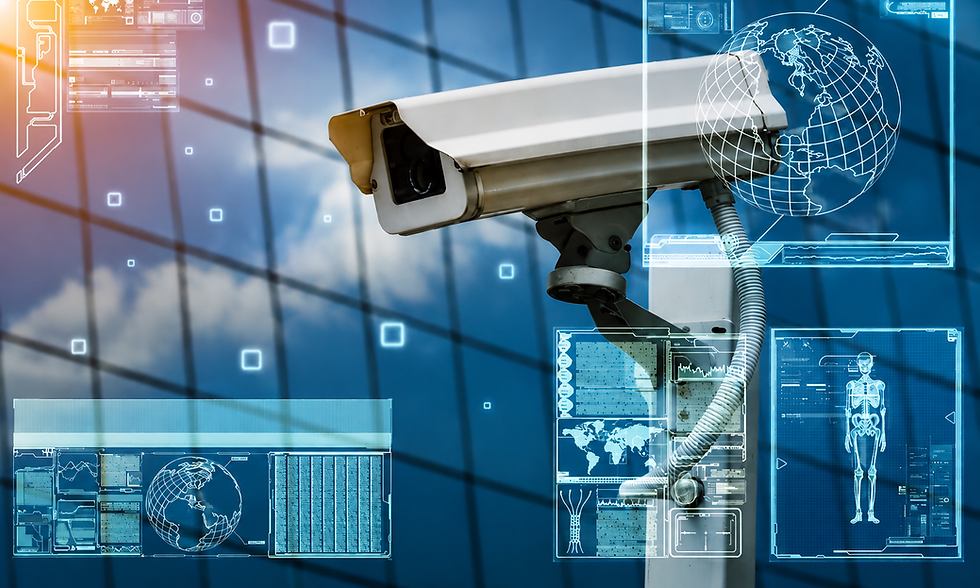
Not long ago, privacy was something most people rarely thought about. A person's daily routine was largely invisible unless someone happened to be watching. Today, that reality has changed dramatically. Smartphones, smartwatches, connected vehicles, home assistants, security cameras, and even kitchen appliances quietly collect data every day, creating an unprecedented digital record of modern life.
Most Americans carry what is arguably the most sophisticated tracking device ever invented: the smartphone. In addition to making calls and sending messages, smartphones record location history, internet searches, shopping habits, app usage, contacts, photos, and even how fast users type or walk. Many apps request access to a phone's camera, microphone, and GPS, often collecting information that helps companies personalize advertising and improve their services.
The data collection doesn't stop there.
Fitness trackers and smartwatches monitor heart rate, sleep patterns, exercise routines, stress levels, and, in some cases, blood oxygen levels. Connected automobiles increasingly record driving behavior, acceleration, braking habits, navigation history, and vehicle diagnostics. Modern homes are becoming digital ecosystems where smart thermostats learn daily routines, voice assistants process spoken commands, doorbell cameras record visitors, and refrigerators can track food inventory.
Much of this information serves legitimate purposes. Navigation apps provide real-time traffic updates. Fitness devices encourage healthier lifestyles. Smart home technology improves convenience and energy efficiency. Manufacturers also use data to diagnose equipment problems and improve future products.
The tradeoff, however, is the creation of enormous amounts of personal information. Technology companies, advertisers, data brokers, financial institutions, and service providers all collect and analyze data to better understand consumer behavior. In many cases, users voluntarily agree to these practices by accepting lengthy privacy policies that few people ever read.
Governments have also entered the conversation. Law enforcement agencies routinely seek digital evidence during criminal investigations, while policymakers continue debating how much personal information companies should be allowed to collect and retain. Around the world, governments are attempting to balance innovation, public safety, national security, and individual privacy through new regulations and oversight.
Artificial intelligence has added another dimension to the debate. AI systems can analyze massive datasets, recognize faces, identify behavioral patterns, and generate remarkably detailed profiles of individuals based on seemingly unrelated pieces of information. Even anonymized data can sometimes be linked back to specific people when combined with other publicly available records.
Privacy advocates argue that stronger legal protections are needed to give consumers greater control over their personal information. Technology companies counter that responsible data collection enables innovation, improves customer experiences, strengthens cybersecurity, and supports countless free online services.
The question facing society is no longer whether personal data is being collected—it clearly is. The more difficult question is whether meaningful privacy still exists in a world where nearly every connected device records something about its user.
For many experts, the debate is no longer about preventing data collection altogether. Instead, it is about determining who owns that information, how it can be used, and whether individuals should have the right to decide how much of their digital lives remains private. In an increasingly connected world, true anonymity may be becoming one of the rarest commodities of all.


Comments